
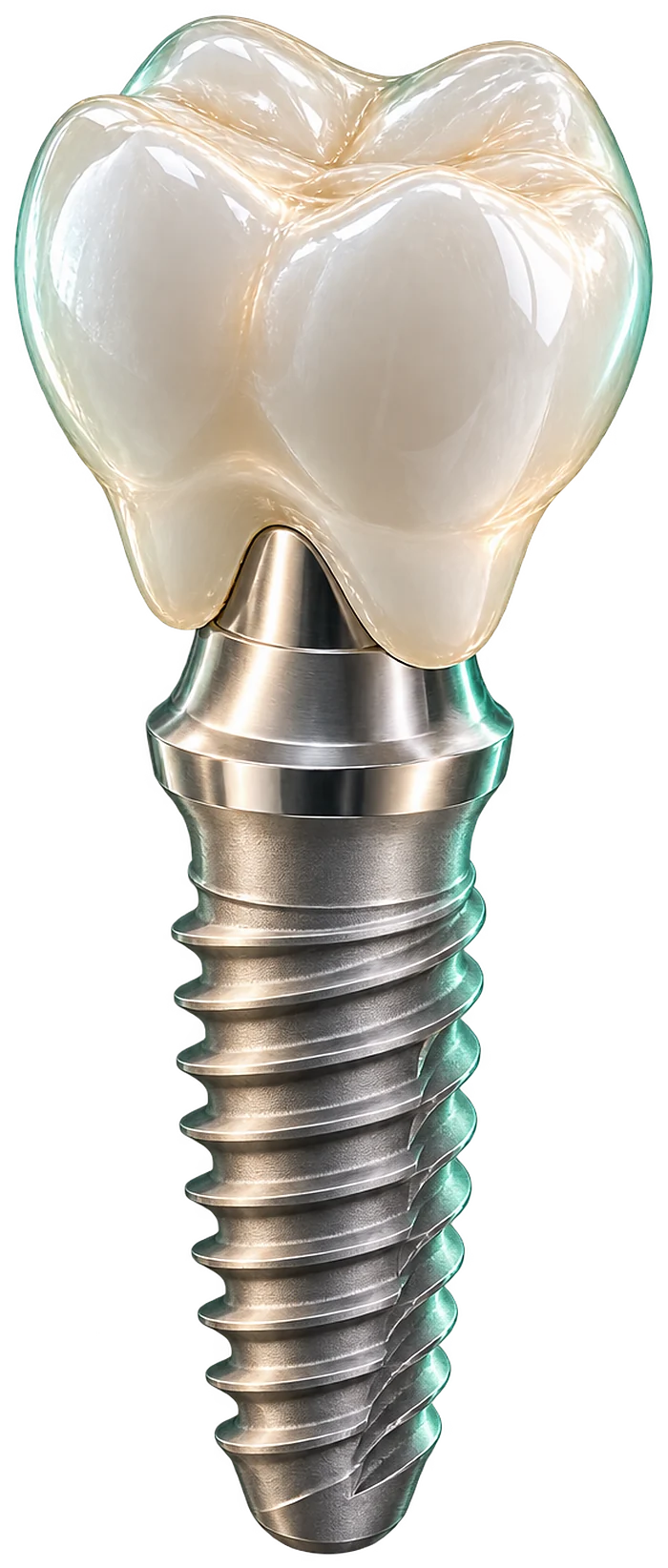
Single implant
One post, one crown. Replaces a single missing tooth.
Best for: One missing toothDental implants
An implant replaces the root of a missing tooth, not just the part you can see. It is the closest thing dentistry has to growing a tooth back, and with good care it can last for decades.
Inside an implant
When a tooth is lost, the bone that held it slowly starts to shrink, because nothing is pressing on it any more. Neighbouring teeth drift into the gap and the bite changes.
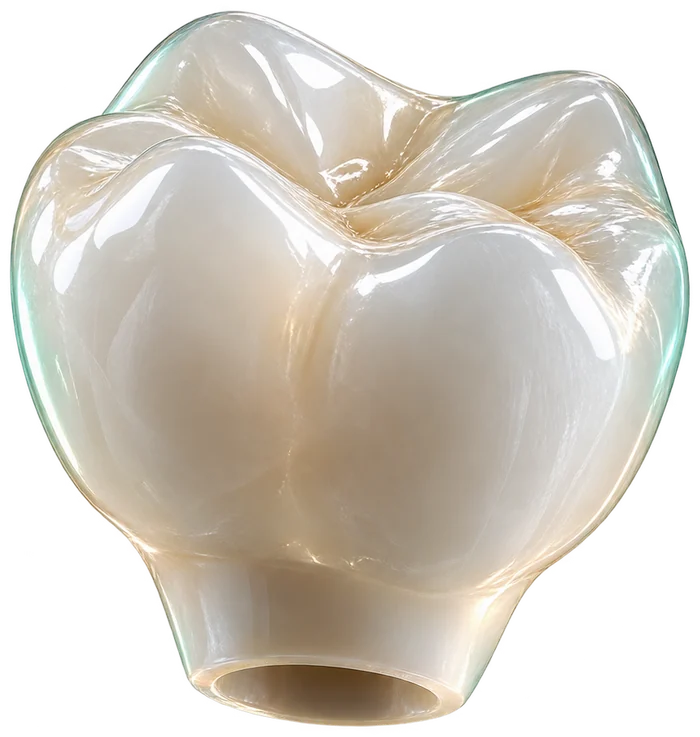
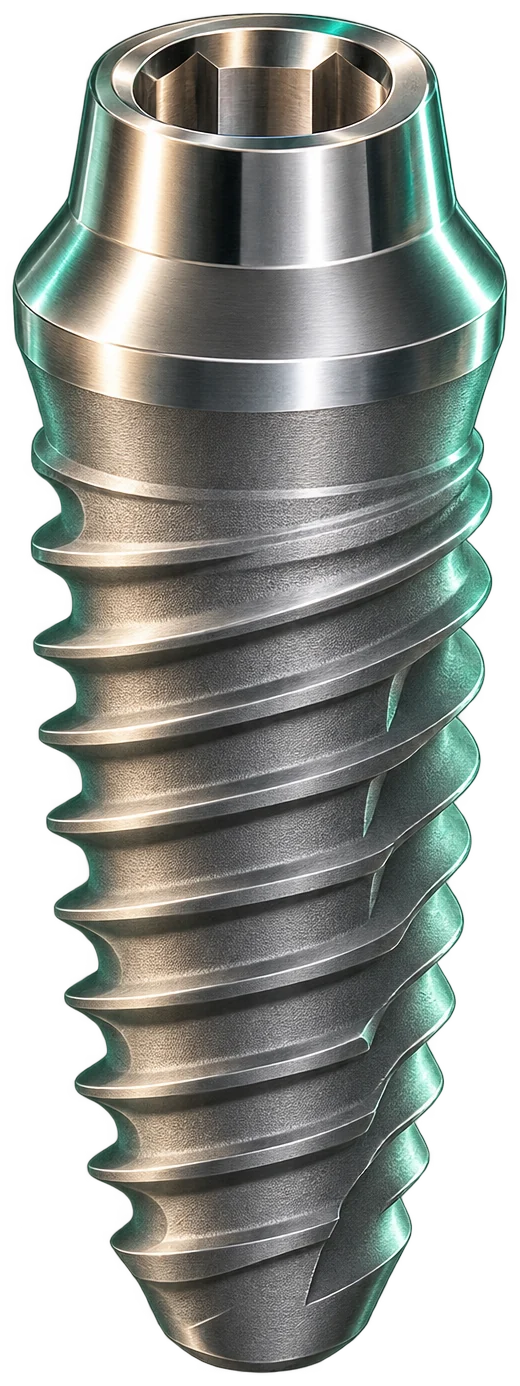
An implant post is placed where the root used to be. Over the following months the bone fuses to it (this is called osseointegration). Once it is solid, a crown is fixed on top. The result is a tooth that stands on its own, without touching or trimming the teeth beside it.
Most healthy adults are suitable. We confirm it with a 3D scan, not a guess.
We take extra care, and sometimes advise waiting, if you smoke heavily, have uncontrolled diabetes, have had radiation to the head or neck, take certain bone medicines, or are pregnant. None of these is an automatic no; they change the plan.
Types of treatment
One post, one crown. Replaces a single missing tooth.
Best for: One missing toothTwo implants support a bridge of three or four teeth.
Best for: Several teeth in a rowA full fixed arch of teeth on four to six implants.
Best for: A whole jawA removable denture that snaps onto two to four implants.
Best for: Loose denturesA temporary tooth on the same day as surgery, when bone quality allows.
Best for: Front teeth, strong boneStep by step
Six stages over a few months. You are only in the chair for a handful of short visits; the rest is your body doing the work.
Visit 1 · 45 – 60 min
A 3D CBCT scan shows us bone height, width and density, and exactly where the nerves and sinus are. We plan the implant’s position on screen and, where useful, print a surgical guide.
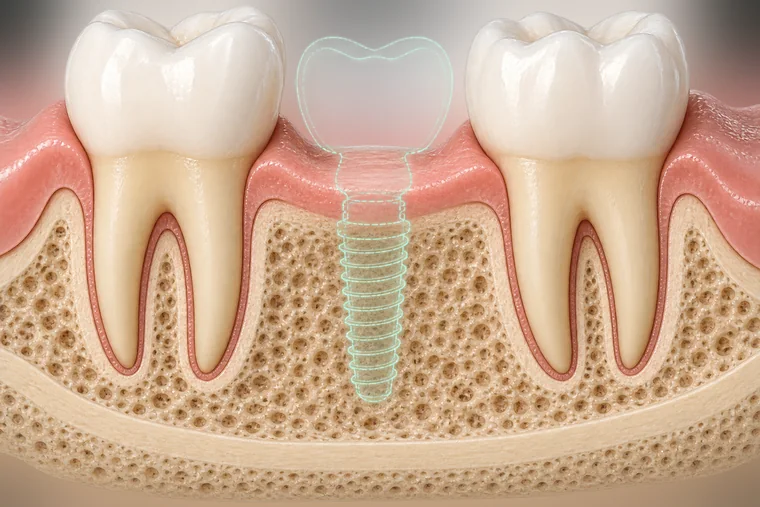
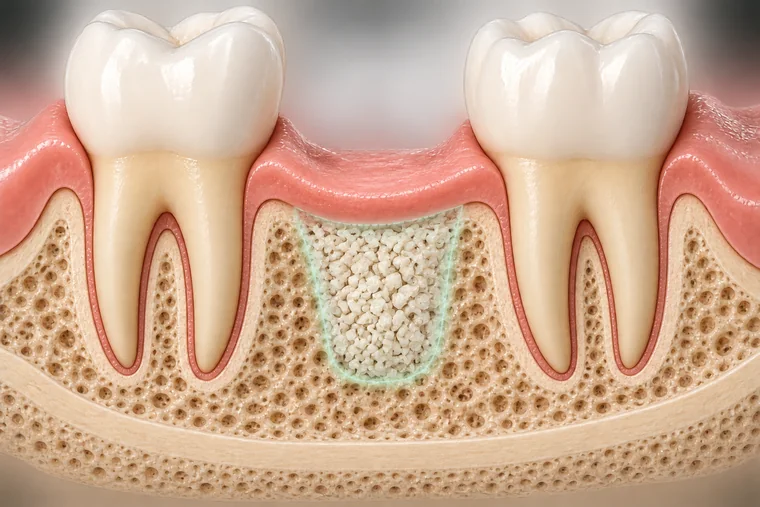
Only some patients · adds 3 – 6 months
If the bone has thinned, we rebuild it with a graft before or during implant placement. Many patients skip this step entirely.
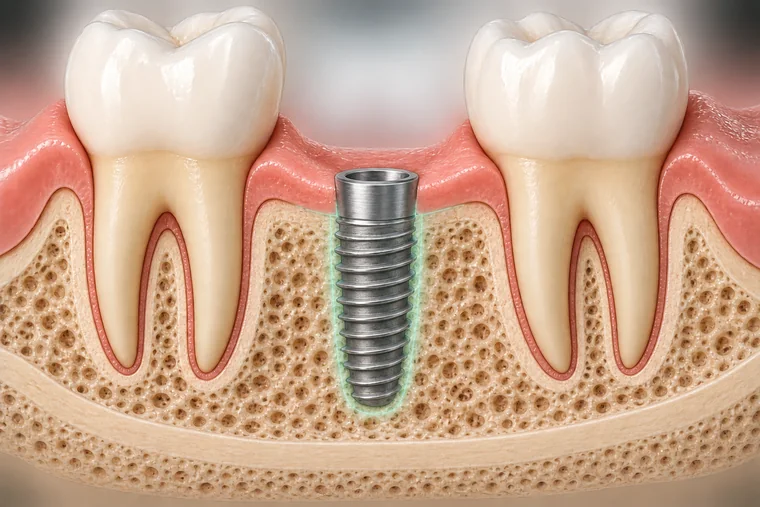
Visit 2 · 45 – 90 min
Under local anaesthesia, the post is placed through a small opening in the gum. Most people describe pressure rather than pain, and are surprised how quickly it is over.
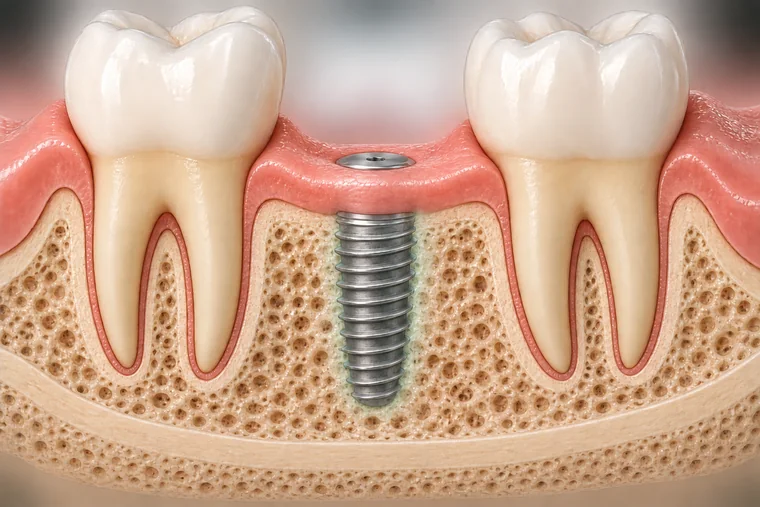
2 – 4 months lower jaw · 4 – 6 months upper
Bone grows onto the implant surface and fuses with it. You can wear a temporary tooth if the gap shows. We check in once during this time.
Visit 3 · 20 – 30 min
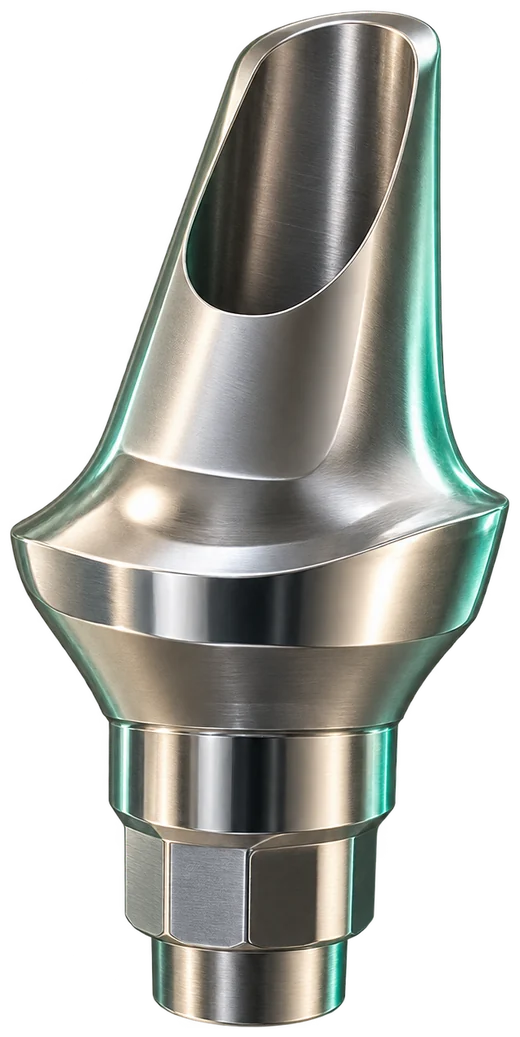
The connector is fitted and a quick digital scan is taken. No goopy moulds.
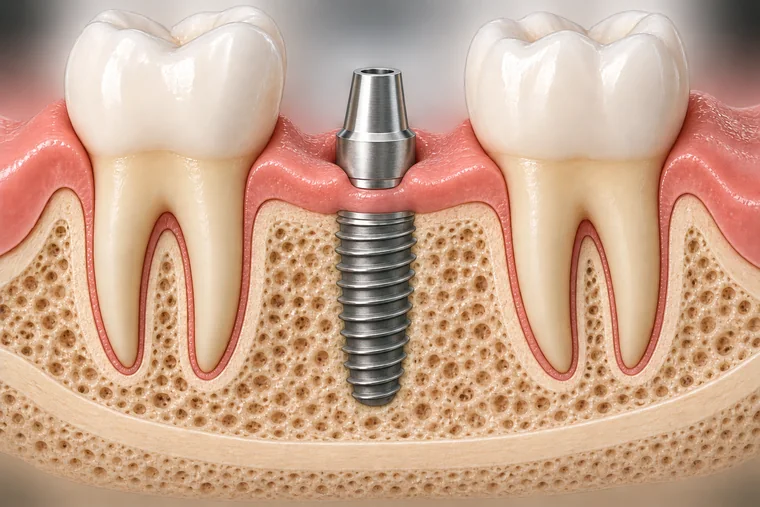
Visit 4 · 30 – 45 min
The custom crown is fixed, the bite is fine-tuned, and you leave with a tooth that is stable from day one.
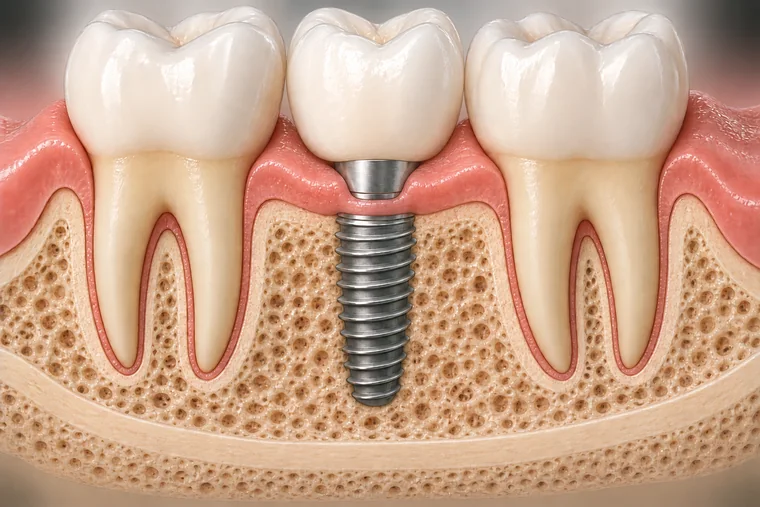
Compare your options
| Feature | Implant | Bridge | Removable denture |
|---|---|---|---|
| Neighbouring teeth | Left untouched | Trimmed to hold crowns | Clasps rest on them |
| Jawbone | Preserved by the implant | Continues to shrink | Continues to shrink |
| Feel when eating | Like a natural tooth | Fixed, close to natural | Can move or rub |
| Cleaning | Brush and floss as normal | Needs a floss threader | Removed and cleaned daily |
| Typical lifespan | Decades for the post | 10 – 15 years | 5 – 8 years |
| Upfront cost | Highest | Moderate | Lowest |
Recovery & aftercare
Numbness for 2–3 hours. Rest, use a cold compress, eat soft, cool food. No spitting or straws today.
Mild swelling and soreness, usually peaking on day two. Ordinary painkillers are enough for most people.
Gentle warm saltwater rinses after meals. Brush normally, softly around the site.
A short review visit. Stitches are removed if they are not the dissolving kind.
Implants are one of the most predictable treatments in dentistry. Long-term studies report around 95% of implants still in place after ten years. We would still rather you hear the risks from us:
We give you a written estimate after your scan, with nothing added later without your agreement.

Most of the work of a good implant happens before surgery, on the 3D plan. By the time you are in the chair, there are no surprises.
Questions
Something not here? Message us on WhatsApp and a doctor will reply.
The procedure is done under local anaesthesia, so you feel pressure but not pain. Afterwards, most people describe it as easier than having a tooth removed, and manage with ordinary painkillers for two or three days.
Usually three to six months from placement to final crown, because the bone needs time to fuse with the implant. If bone grafting is needed first, it can take longer. You will not be without a tooth in a visible area; we make a temporary one.
There is no upper age limit. General health and bone quality matter far more than age, and we regularly place implants for patients in their seventies and eighties.
Often, yes, if your blood sugar is well controlled. We may coordinate with your physician and allow a little more healing time.
They should not. The crown is shade-matched to your own teeth, and the gum around it is shaped to look natural.
Nothing dramatic at first. Over time the bone there shrinks, the teeth on either side tip into the space, and the opposite tooth can drift out of its socket. That makes treatment later more complex.
Book an evaluation for dental implants. We’ll explain your options, the timeline and the cost in writing, with no obligation.
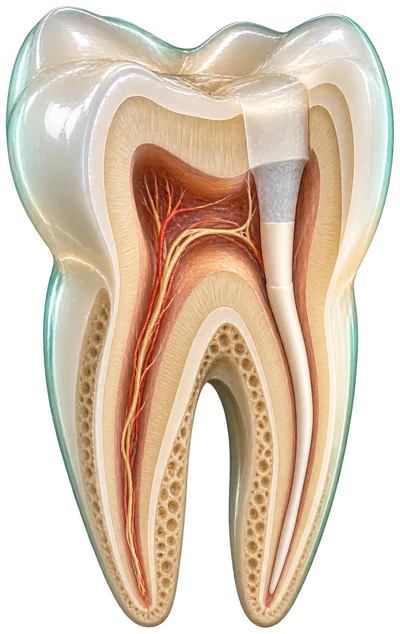
Relieves the pain of an infected tooth and saves it, with gentle, microscope-guided care.
Treatment duration1 – 2 visits 03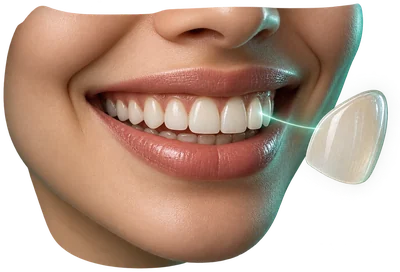
A personalised plan, previewed digitally, for a natural and more confident smile.
Treatment duration2 – 4 weeks 04
A safe, supervised way to a brighter, more youthful smile, in a single visit.
Treatment duration60 – 90 min