
Root canal treatment
Relief from pain. Protection for your natural tooth.
A root canal removes infected or inflamed tissue from inside a tooth, cleans it and seals it, so you keep your own tooth instead of losing it. Done well, it feels much like having a filling.
- Visits
- 1 – 2
- Each visit
- 60 – 90 min
- Anaesthesia
- Local
- Crown
- 1 – 2 weeks later
The treatment
What happens inside the tooth
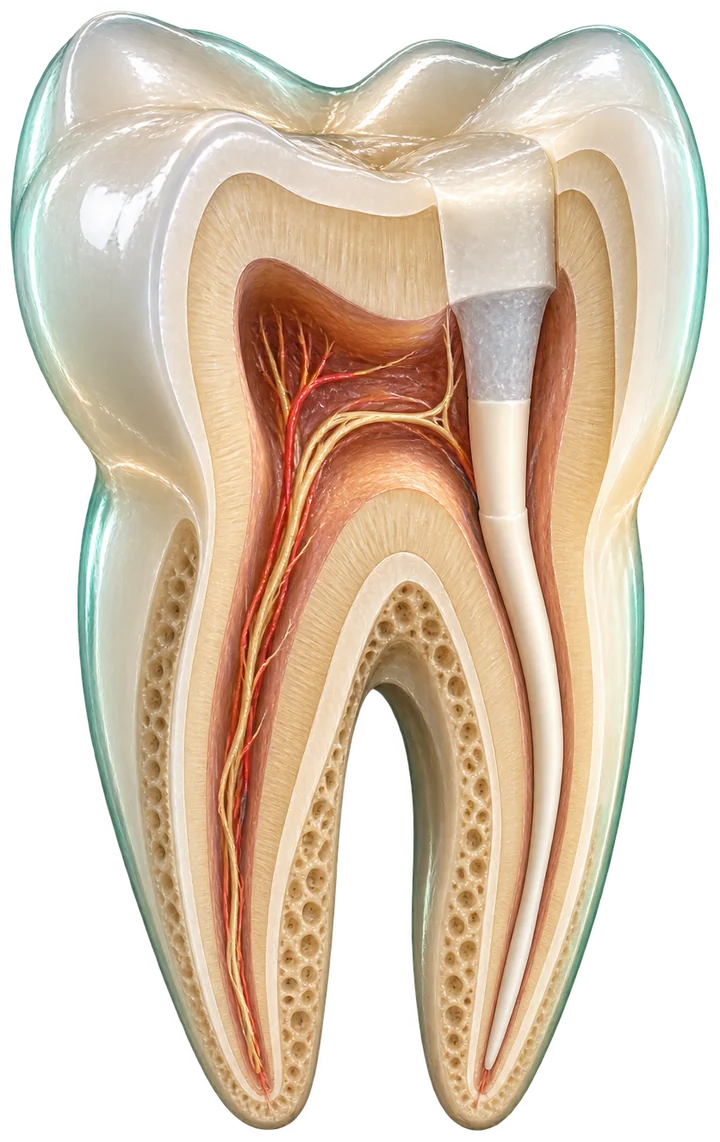
Inside every tooth is the pulp: soft tissue with nerves and blood vessels. Deep decay, a crack or an old filling can let bacteria reach it, and the pulp becomes inflamed or infected. That is the throbbing, lingering pain people dread.
Root canal treatment removes that tissue, disinfects the canals and fills them with a biocompatible material. The tooth no longer hurts, and it stays in your mouth doing its job.
What you may notice
- Persistent toothacheEspecially a throbbing pain that wakes you at night.
- Lingering sensitivityHot or cold that hurts for many seconds after it is gone.
- Pain when bitingTenderness when chewing or tapping on the tooth.
- Swelling or a gum pimpleA small bump on the gum near the tooth can mean an abscess.
- A darkening toothGrey or darker colour after an injury or old decay.
Sometimes an infected tooth causes no pain at all and is found on an X-ray. It still needs treatment.
Step by step
A more comfortable path to relief
-
1
Diagnosis & digital X-ray
We find the cause with a low-dose digital X-ray, and a 3D scan for complex teeth, and explain what we see on screen.
15 – 30 min
-
2
Gentle cleaning
The tooth is numbed fully. Under the dental microscope, infected tissue is removed and the canals are shaped and disinfected.
30 – 60 min
-
3
Sealing
The clean canals are filled and sealed with a biocompatible material, so bacteria cannot return.
20 – 30 min
-
4
Crown & recovery
Back teeth usually need a crown to protect them from cracking. We scan for it digitally and fit it at a short visit.
1 – 2 weeks later
Recovery & aftercare
After your treatment
- First day
The tooth may feel tender when biting. Avoid chewing on it until the numbness has worn off.
- Day 2 – 4
Mild soreness settles with ordinary painkillers. Severe or increasing pain is not normal; call us.
- Until the crown
Chew on the other side. A temporary filling is not as strong as the final crown.
Looking after it, long term
- Brush and floss as normal.
- Keep your crown appointment; it protects the tooth long term.
- Regular check-ups let us confirm the area has healed on X-ray.

Under the microscope we can see canals that are thinner than a hair. That precision is why we can save teeth that might otherwise be lost.
Questions
Asked by patients, answered plainly.
Something not here? Message us on WhatsApp and a doctor will reply.
Is a root canal painful?
With modern anaesthesia the treatment itself should feel like a long filling. The pain people associate with root canals is usually the infection before treatment, which the procedure relieves.
Why not just remove the tooth?
Your natural tooth is usually the best thing to keep. Removing it means replacing it later with an implant or bridge, which costs more and takes longer.
How long will the tooth last?
A well-sealed root canal with a good crown can last as long as your other teeth.
Will my tooth look natural afterwards?
Yes. The crown is shade-matched to your own teeth.
Ready when you are.
Book an evaluation for root canal treatment. We’ll explain your options, the timeline and the cost in writing, with no obligation.
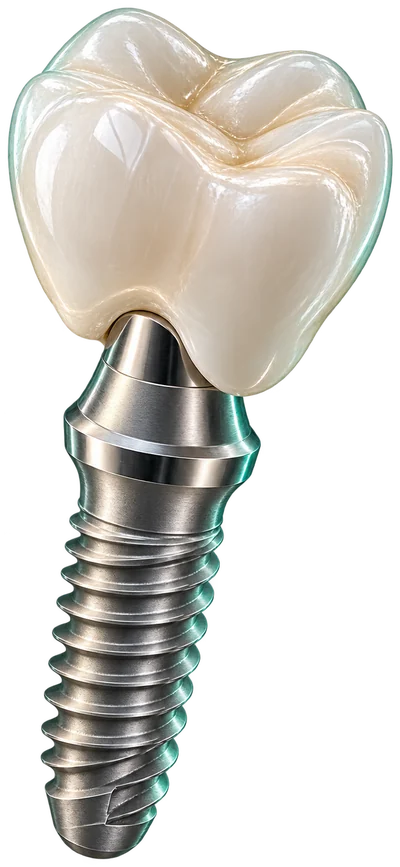
Dental Implants
A permanent replacement for a missing tooth that looks, feels and works like your own.
Treatment duration3 – 6 months 03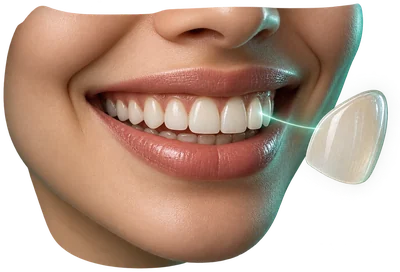
Smile Design
A personalised plan, previewed digitally, for a natural and more confident smile.
Treatment duration2 – 4 weeks 04
Teeth Whitening
A safe, supervised way to a brighter, more youthful smile, in a single visit.
Treatment duration60 – 90 min